How Invoice Factoring Can Help Reduce Your Business Tax Burden?
By Rosie Joe
371 Views
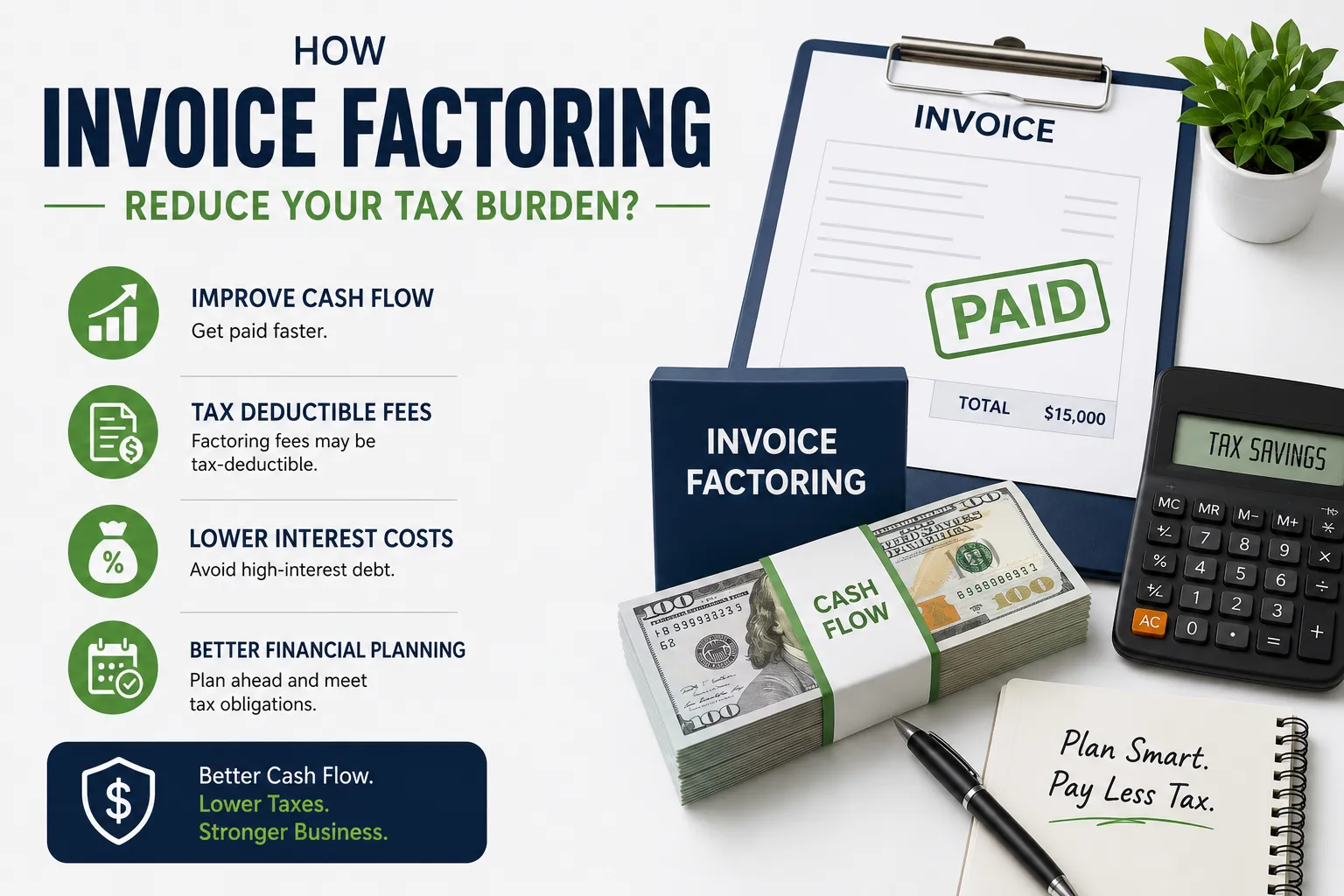
Almost every growing business has had this exact experience at the end of the tax year. You had a great twelve months, you hit all your sales targets, and your order book is full. Then your accountant sends you your tax bill, and you realise you have almost no cash in the bank to pay it. Almost all of your profit is tied up in unpaid invoices that your customers will pay in 60 days. You end up paying far more tax than you expected, and you have to borrow money just to pay the bill.
Almost none of them will tell you that invoice factoring is one of the most effective and underused tax planning tools available to most businesses. This is not a trick or a loophole; this is standard accounting treatment that almost every accountant will confirm. For most smaller businesses, small business invoice factoring will almost always deliver the clearest and most straightforward tax advantages in the UK.
Can Invoice Factoring Actually Reduce Your Business Tax Burden?
This is not a claim that factoring will erase your tax bill entirely. It is a claim that, when used correctly, it can reduce your tax burden significantly and legally.
Invoice factoring is almost always marketed exclusively as a cash flow solution. Even most factoring companies themselves will rarely mention the tax benefits. This is partly because most sales teams do not understand it themselves, and partly because HMRC has never challenged this treatment. The core difference that makes this work is very simple. Factoring is not a loan; it is the sale of an asset. That single distinction changes everything about how it is treated for tax.
The Core Accounting Difference That Impacts Tax
Almost the entire tax benefit comes down to one single difference in classification. This is not opinion, this is standard UK GAAP and HMRC guidance.
Treatment
Bank Overdraft
Invoice Factoring
Classification
Debt
Sale of receivables
Balance sheet impact
Increases liabilities
No change to net assets
Fee tax treatment
Partially deductible
100% fully deductible
Timing impact
Fixed
Fully flexible
The Three Specific Tax Benefits Of Factoring
None of these are loopholes, none of these will attract attention from HMRC. All of these are standard accepted treatments that have been in place for over 20 years.
Fully Deductible Fees
This is the single biggest and most underrated benefit of factoring. Every single fee that you pay to a factoring company is a 100% allowable deduction against your taxable profit. This is not the case for bank loans, overdrafts, or almost any other form of business finance. For a business paying 25% corporation tax, this immediately reduces the net cost of factoring by one quarter.
● Every fee, discount, and charge is fully deductible
● No restriction or cap applies to this deduction
● You get full tax relief in the same year you pay the fee
● This treatment is explicitly confirmed in HMRC guidance
Control Over Timing Of Income And Expenses
This is the benefit that will have the biggest impact for most businesses. Factoring gives you complete control over when you recognise income and expenses within a single tax year. You can choose to bring income forward into the current year or push expenses forward into the next year, depending on what makes the most sense for your tax position. Almost no other financial tool gives you this level of control.
● Smooth out large spikes in taxable profit between years
● Avoid moving into a higher tax bracket by accident
● Align income and expenses far more accurately
● Plan your tax position with far more certainty
Eliminate Tax On Unreceived Money
This is the benefit that hits almost every growing business. Almost all businesses in the UK use accruals accounting. This means that you pay tax on an invoice the day you send it, not the day you get paid. You can easily end up in a position where you owe 25% tax on money that you will not receive for another 90 days. Factoring completely removes this extremely common problem.
● You never pay tax on money you do not hold
● You do not have to borrow money to pay tax on unpaid invoices
● You eliminate the single biggest cash flow gap for most businesses
● This benefit is almost entirely unknown to most business owners
Strategic Use Cases For Maximum Tax Benefit
There are three very specific situations where factoring will have a far larger impact on your tax bill than any other tax planning tool.
● At the end of a very strong trading year, to reduce excess profit
● When you are about to cross the 25% small profits rate threshold
● When you have a large number of invoices outstanding at year's end
Choosing The Right Provider For Maximum Benefit
If you want to access all of these benefits, you need to use a correctly structured facility. Not all factoring arrangements qualify for this tax treatment. There are a large number of invoice finance companies in the UK, but very few will structure the agreement correctly to maximise your tax benefit.
● Ensure the agreement is structured as a true sale of receivables
● Confirm that all fees will be classified fully as operating expenses
● Avoid any facility that is classified as debt for accounting purposes
● Ask your accountant to review any agreement before you sign
Conclusion
This is one of the most underused legitimate tax-planning tools available to small and medium-sized businesses in the UK right now. Invoice factoring will never eliminate your tax bill, and it is not the right solution for every single business. But for any business that carries unpaid invoices on its books, it can deliver a combination of cash flow and tax efficiency that almost no other financial product can match.
Most business owners will spend dozens of hours looking for small ways to reduce their tax bill, and completely ignore this one very simple option.
FAQs
Does HMRC accept this treatment of invoice factoring?
Yes, this treatment has been explicitly confirmed by HMRC and has been standard practice for over 20 years.
Will using factoring trigger an investigation from HMRC?
No, there is no connection between using factoring and the increased risk of HMRC inspection.
Can I use this for end-of-year tax planning?
Yes, this is one of the most effective last-minute tax-planning tools available to most businesses.